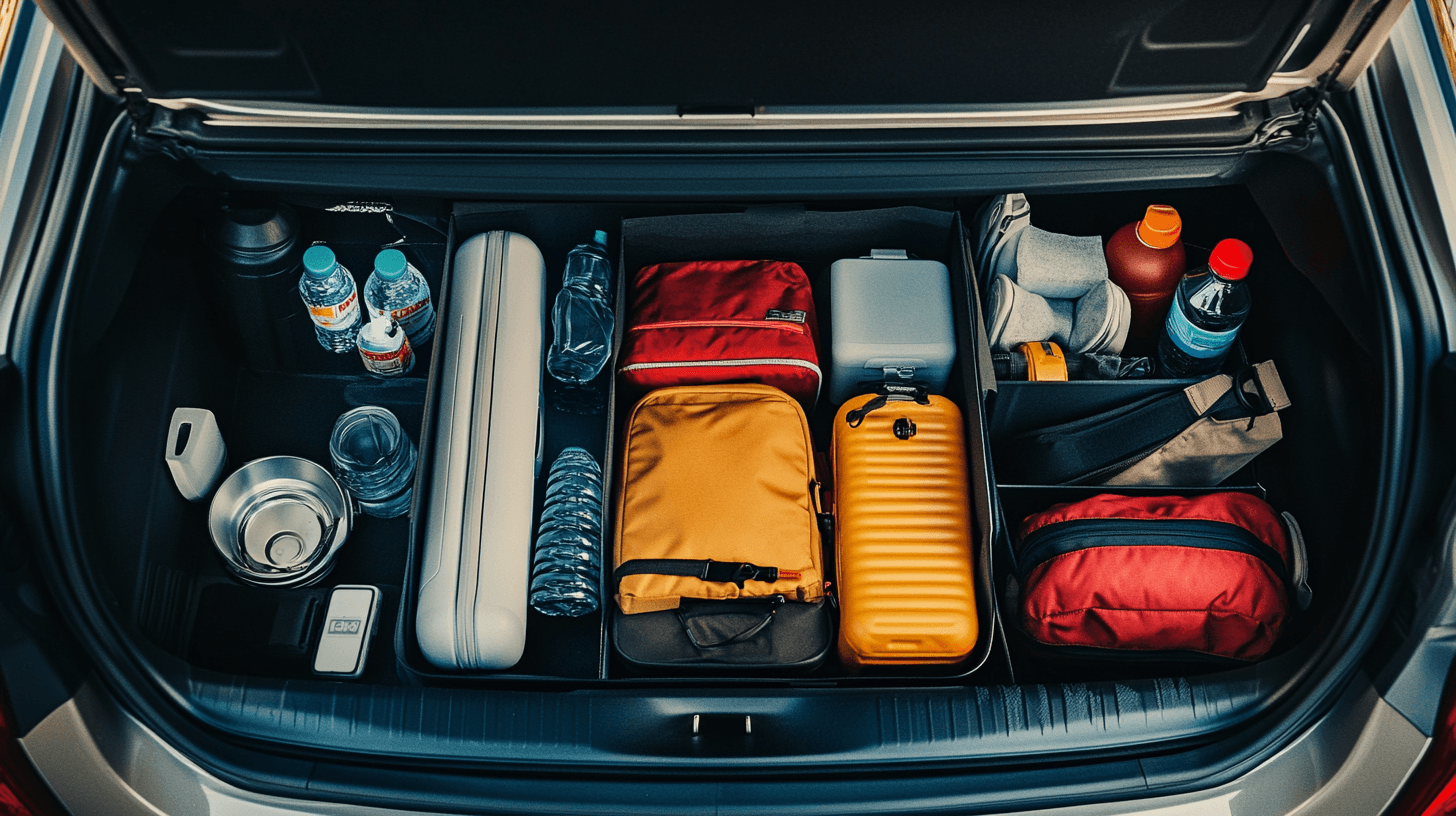
A road trip is the best stress test for any vehicle. Hundreds of miles at highway speed will expose weak tires, low fluids, and deferred maintenance that might not matter for your daily commute. Here's a thorough pre-trip checklist to keep you safe and avoid a breakdown far from home.
The Pre-Trip Mechanical Checklist
- ✓Tires — Check tread depth (minimum 4/32" for highway driving), look for uneven wear, cracks, or bulges. Inflate to the pressure listed on the driver's door jamb sticker, not the tire sidewall. Don't forget the spare.
- ✓Oil and filter — If you're within 1,000 miles of your next oil change, do it before the trip. Highway miles are easy on oil, but starting a trip with fresh oil is peace of mind.
- ✓Coolant — Check the level when the engine is cold. The reservoir should be between the min and max marks. If it's low, top off with the correct type (check your owner's manual).
- ✓Brakes — Listen for squealing or grinding. If your brakes are near replacement age, get them done before the trip. Mountain driving demands strong brakes.
- ✓Battery — If your battery is 3+ years old, have it tested. Heat and extended use accelerate battery failure. A dead battery 200 miles from home ruins a trip fast.
- ✓Wipers and washer fluid — Replace worn wipers and fill the washer fluid reservoir. Highway driving kicks up bugs and road grime constantly.
- ✓Belts and hoses — Visually inspect for cracks, fraying, or soft spots. A serpentine belt failure on the highway will leave you stranded.
- ✓Lights — Check all headlights, taillights, brake lights, and turn signals. A burned-out light is an easy ticket and a safety hazard on unfamiliar roads at night.
EV-Specific Prep
If you're road tripping in an EV, add these to your checklist:
- ✓Plan charging stops — Use your car's built-in planner or apps like A Better Route Planner (ABRP) to map DC fast chargers along your route with backups.
- ✓Install charging apps — Download and set up accounts for ChargePoint, Electrify America, EVgo, and Tesla (if applicable) before you leave.
- ✓Bring your Level 1/Level 2 cable — Your mobile charging cable is your backup. Many hotels and Airbnbs have standard outlets or 240V outlets you can use.
- ✓Check tire pressure carefully — EVs are heavier than gas cars and more sensitive to tire pressure. Proper inflation is critical for maximizing range.
- ✓Update your car's software — Manufacturers push navigation and charging updates. Make sure you're on the latest version before departing.
The Interior Detail
A clean interior makes long hours in the car significantly more enjoyable:
- ✓Vacuum everything — Seats, carpets, crevices, and the trunk. Start the trip with a clean cabin.
- ✓Clean the windshield inside and out — A dirty interior windshield creates terrible glare at night and in direct sun. Clean it with glass cleaner and a microfiber towel.
- ✓Organize the cabin — Set up a center console organizer, door pocket bags, or a seatback organizer for snacks, chargers, and essentials within arm's reach.
- ✓Install a fresh air freshener — A subtle vent clip freshener makes the cabin more pleasant for hours of driving.
Emergency Kit Essentials
| Category | Items |
|---|---|
| Safety | Reflective triangles, high-vis vest, flashlight with extra batteries |
| Tire | Spare tire (inflated), jack, lug wrench, tire inflator/sealant kit |
| Electrical | Jumper cables or jump starter pack, phone charger, USB cables |
| Fluid | Extra quart of oil, coolant, washer fluid |
| First Aid | Basic first aid kit, medications, hand sanitizer |
| Weather | Blanket, rain poncho, sunscreen, water bottles |
Protecting the Exterior
Highway driving is brutal on your paint. Hundreds of miles of bug splatter, road tar, and rock chips add up:
- ✓Wash and wax before you go — A fresh coat of wax or sealant makes bug and tar removal much easier when you get back. The slippery surface prevents contaminants from bonding.
- ✓Apply a temporary paint protection film — If you don't have PPF, temporary film for the hood and bumper is available for about $30 and peels off after the trip.
- ✓Pack a bug remover and microfiber towels — Clean bugs off the front end daily. Left overnight, they etch into clear coat, especially in summer heat.
- ✓Consider ceramic coating — If you road trip frequently, a ceramic coating on the front end makes decontamination dramatically easier year-round.
Comfort and Entertainment
- ✓Download offline maps — Cell service can be spotty in rural areas. Download your route in Google Maps or Apple Maps for offline navigation.
- ✓Download podcasts and music — Streaming will cut out in dead zones. Pre-download entertainment for the whole trip.
- ✓Bring a quality phone mount — A secure, vibration-free phone mount keeps navigation visible and your phone off the seat.
- ✓Sunshade for parked stops — A windshield sunshade keeps the cabin bearable when you stop for lunch or sightseeing.
- ✓Seat cushion for long drives — If your car doesn't have the most supportive seats, a quality lumbar cushion prevents back pain on 4+ hour drives.
One Week Before Checklist
- ✓Schedule oil change if due within 1,000 miles
- ✓Check and replace worn tires, wipers, or brake pads
- ✓Have the battery tested if it's 3+ years old
- ✓Verify your roadside assistance membership is current
- ✓Download offline maps and entertainment
- ✓Order any accessories you need (phone mount, organizers, cushion)
Day Before Checklist
- ✓Wash the car and apply wax/sealant
- ✓Check tire pressure (including spare)
- ✓Top off all fluids (oil, coolant, washer fluid)
- ✓Vacuum and clean the interior
- ✓Pack the emergency kit
- ✓Charge your EV to 100% (or fill the gas tank)
- ✓Set up cabin organizers and load the trunk
Final Thoughts
A little preparation prevents a lot of roadside stress. Most road trip breakdowns are caused by issues that were already present before the trip started — worn tires, old batteries, low fluids, and deferred maintenance.
Spend an hour going through this checklist before you leave, and you'll drive with confidence knowing your car is ready for whatever the road throws at it. The best road trips are the ones where the car is invisible — it just works while you enjoy the drive.