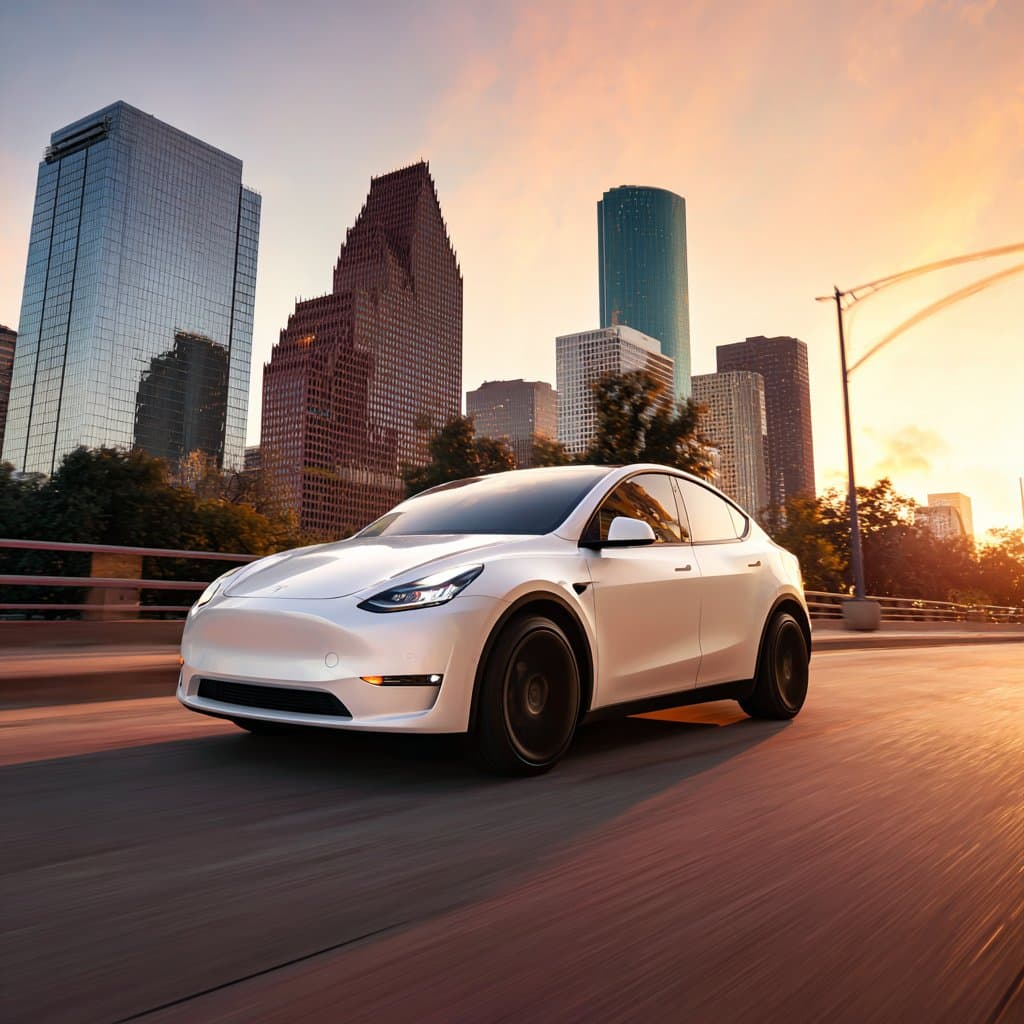
On Saturday, April 18, 2026, Tesla quietly expanded its Robotaxi service into Houston and Dallas — two of the largest metros in the country and the company's first major move beyond its original Austin launch zone. Three days earlier, on April 15, Waymo did something arguably more consequential for Florida readers: it removed the waitlist and opened its driverless ride-hailing service to every adult in Orlando and Miami. Two of the biggest autonomous driving companies in the world made major expansion announcements within 72 hours of each other, and for the first time the battle lines are clearly drawn. The autonomous ride-hailing war has officially arrived — and Florida is already on the front line.
For years, driverless cars have been something you read about in press releases from California. That's no longer true. As of this weekend, a rider in Houston, Dallas, Austin, Miami, or Orlando can open an app on their phone and summon a car with no human driver — a direct competitor to Uber and Lyft, except without the person in the front seat. The implications for EV ownership, resale values, urban planning, and Florida's automotive economy are enormous. Here's what actually happened, how the two services compare, and what it means if you live in Florida.
Tesla Robotaxi lands in Texas
Tesla's Houston and Dallas launch on Saturday was notable for what the company didn't say. There was no press event, no keynote, no Musk stage show. Instead, the company posted a short video on X showing a Tesla Model Y pulling up to a curb in Houston with no one in the front seat — no driver, and critically, no safety monitor either. A rider climbed into the back and the car drove off. The footage was consistent with what Tesla calls its “unsupervised” Robotaxi configuration.
The Texas expansion pushes Tesla Robotaxi beyond its original Austin pilot, which launched in 2025, and the San Francisco Bay Area service that followed later that year. Houston and Dallas make four cities total. The timing is not a coincidence: Tesla's Q1 2026 earnings call is scheduled for April 22, just four days after the Texas launch, and Elon Musk has made Robotaxi growth a central pillar of the company's story for investors.
According to the Q4 2025 shareholder deck, Tesla is working toward a seven-city rollout in the first half of 2026. The confirmed targets are Phoenix, Miami, Orlando, Tampa, and Las Vegas, alongside the Houston and Dallas launches that just happened. If that timeline holds, Tesla Robotaxi will be operating in three Florida metros within the next three months — a remarkable pace for a service that didn't exist 12 months ago.
The hard numbers are still modest. Austin has roughly 42 Robotaxi vehicles in operation, and the Bay Area fleet reached around 130 vehicles by late 2025. The Bay Area service still uses safety drivers in the front seat — a regulatory requirement in California — while Austin has been publicly described by Tesla as “ramping unsupervised.” Tesla has not disclosed fleet size or pricing for Houston or Dallas, and the company's February filing with federal regulators reported 14 crashes involving Austin Robotaxi vehicles since the original launch. None of those incidents were fatal, but the number is a reminder that “driverless” is still very much a work in progress.
Technically, Tesla's approach is unique. Every Robotaxi is a production Model Y running a modified version of Tesla's Full Self-Driving software stack, relying exclusively on cameras — no lidar, no high-definition maps, no external radar beyond what ships on the standard vehicle. That's a hugely controversial bet. Every other serious robotaxi operator in the world uses sensor fusion. Tesla argues that cameras plus neural networks plus scale will eventually beat everyone else. Houston and Dallas are the latest public test of that thesis.
How the service works
From a rider's perspective, Tesla Robotaxi is designed to feel familiar. You download the Tesla Robotaxi app, create an account, and request a ride. A Model Y arrives with no one in the front seats. You unlock the door using the app, climb in, and the car drives you to your destination. Payment is handled in-app, just like Uber. The entire operational model is “Uber minus the driver” — and that's exactly the point.
The important caveat is the geofence. Tesla Robotaxi only operates inside specific service areas defined by the company. In Austin, that zone has gradually expanded over the past year but still excludes certain highways, airport terminals, and parts of the suburbs. Riders who try to book a trip outside the geofence get an error. Tesla has not yet published the exact Houston and Dallas service maps, but based on the Austin pattern, expect the initial zones to cover central business districts, major tourist areas, and dense residential neighborhoods — not suburban sprawl.
Pricing, too, has been deliberately aggressive. In Austin, Tesla launched with a flat rate undercutting UberX, and the company has hinted that Houston and Dallas will follow the same playbook. The real cost savings are on the supply side — no driver payroll, no tips, no surge pricing tied to labor supply — and Tesla appears willing to pass that saving to riders in order to build a habit.
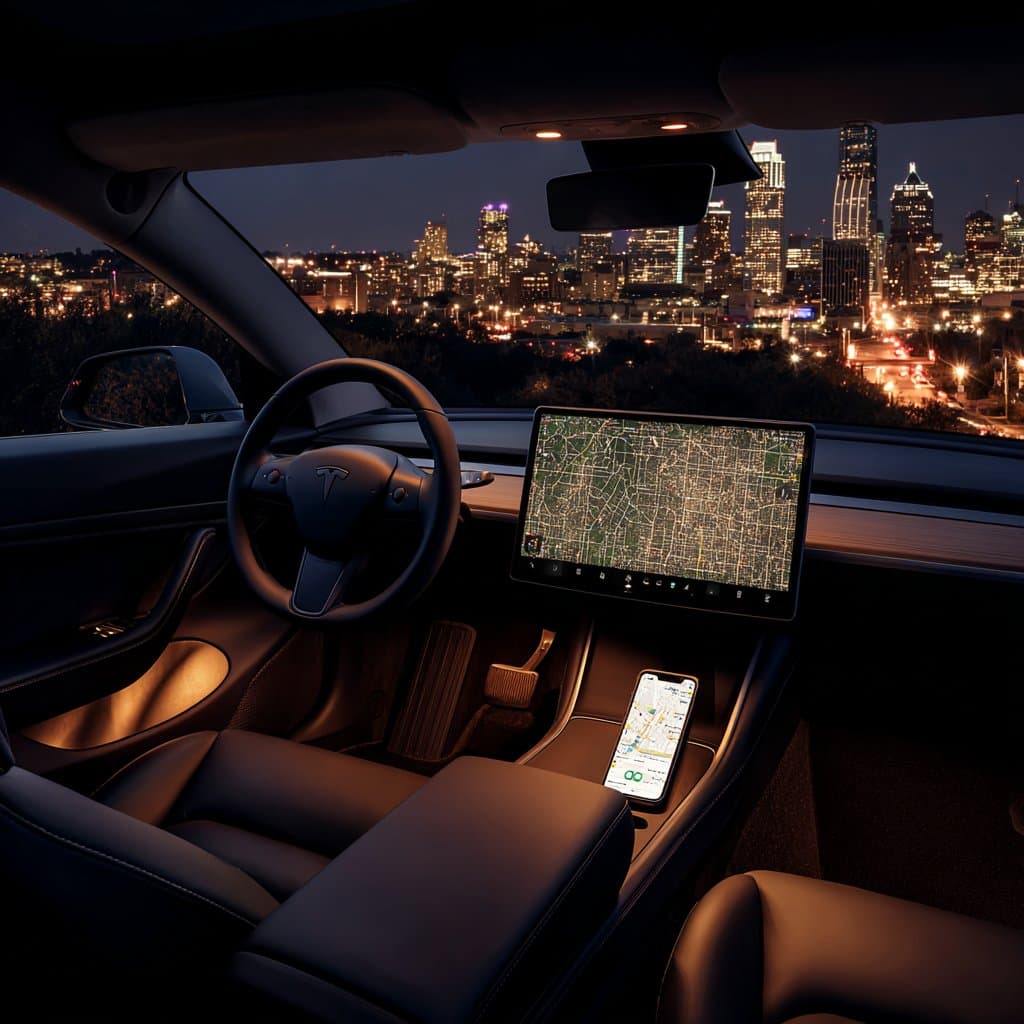
Meanwhile, Waymo already owns Florida
Here's the part that matters most to HealVanna readers: while Tesla was launching its first Texas cities, Waymo quietly flipped the switch on full public access in Orlando and Miami. On April 15, 2026, Waymo removed the waitlist that had gated the service since its February launch, and any adult with the Waymo One app can now hail a driverless Jaguar I-Pace in either Florida metro.
The demand has been staggering. More than 150,000 people joined the Miami and Orlando waitlists in the two months between the soft launch and the public opening. That's a huge number for a service that was, until last week, technically invitation-only. It also suggests that Florida riders are both curious about and comfortable with the idea of a car that drives itself — something many observers had assumed would take longer to take hold outside California and Arizona.
Waymo's Orlando coverage spans approximately 60 square miles, covering Parramore, Richmond Heights, Williamsburg, Florida Center, and the broader Southwest Orlando area. Notably, the service does not currently operate on I-4 — the interstate that cuts through the metro — and it does not yet serve Orlando International Airport. Those are meaningful gaps for a city whose entire tourism economy flows through MCO, and Waymo has signaled that airport access is a priority for later in 2026.
Miami is further along. The Miami service now includes highway access, letting riders travel from Coral Gables up to Wynwood and across to Miami Beach — routes that previously required a human Uber or your own car. That highway capability is a big deal. Waymo operating on a 65 mph urban freeway is the kind of real-world deployment that used to be years away, and it's happening in South Florida right now.
Florida's regulatory posture explains a lot of this. The state passed a sweeping autonomous vehicle law back in 2019 that explicitly does not require a human in the vehicle and that prohibits local governments from imposing their own AV restrictions. Few other states went that far. Orlando Mayor Buddy Dyer has publicly welcomed Waymo, and Miami's city government has been equally accommodating. For a technology that lives and dies on political tailwinds, Florida is about as friendly a market as Waymo is going to find in the continental US.
Tesla vs Waymo — comparing apps, pricing, coverage, technology
Now that both services are operating in overlapping markets, the head-to-head comparison finally matters. Here's how they stack up.
Vehicles
Tesla uses the Model Y — a production EV that any retail customer can buy. Waymo currently operates the Jaguar I-Pace, a luxury electric SUV, and is in the process of rolling out the Hyundai Ioniq 5 as its next-generation platform. The Jaguar's cabin is quieter and more spacious; the Model Y is newer and has fewer miles on it on average because Tesla's fleet is still young.
Technology
This is the biggest philosophical split in the industry. Tesla runs a cameras-only stack with neural networks doing all the work. Waymo runs sensor fusion — lidar, cameras, and radar layered together, with high-definition pre-mapped environments. Tesla bets on generalization and scale; Waymo bets on redundancy and precision. There is no consensus answer on which approach wins in the long run, and both companies are genuinely making progress.
Cities open to the public
Tesla Robotaxi is currently live in four metros — Austin, the Bay Area, Houston, and Dallas. Waymo is live in six: Phoenix, San Francisco, Los Angeles, Austin, Orlando, and Miami. Waymo also has early-access programs running in Atlanta, Dallas, Houston, San Antonio, and Nashville, which means Tesla and Waymo are already operating simultaneously in Austin, Dallas, and Houston, with Florida the next overlap.
Safety record
Tesla has disclosed 14 Austin Robotaxi crashes since launch in its February regulatory filing, none fatal. Waymo, by contrast, has published insurance claims data showing that its driverless miles result in dramatically fewer collisions than comparable human driving miles — and the company has now crossed tens of millions of driverless miles without a fatality caused by the vehicle's software. The Waymo safety story is more mature, more transparent, and easier to defend in court. Tesla's story is still being written.
The Florida overlap
Once Tesla Robotaxi launches in Miami, Orlando, and Tampa later in the first half of 2026, Florida will become the first state with head-to-head robotaxi competition between Tesla and Waymo in the same metros. Riders will be able to open either app, compare prices and wait times, and choose. That is a genuinely new thing, and it will produce the first real consumer preference data between the two approaches.
What this means for Florida drivers
If you live in Orlando or Miami, the practical answer is: you can use a robotaxi right now. Download the Waymo One app, set up an account, hail a ride. The service is live, public, and priced competitively with UberX. There is no waitlist. You do not need to know anyone at Waymo. It just works.
If you want to compare Tesla Robotaxi side-by-side with Waymo, you'll need to wait a bit longer. Tesla has confirmed Miami, Orlando, and Tampa as H1 2026 launch cities, and based on the Texas timeline, “H1 2026” could mean as early as May or as late as June. If you're the kind of rider who wants the novelty of being first, Waymo gives you that option today. If you're a Tesla loyalist waiting for the home-team version, you've got a short wait.
The bigger question a lot of our readers are asking is whether robotaxis make EV ownership obsolete. Our honest answer is: no, not for most people and not anytime soon. Robotaxis are excellent for one-off urban trips — dinner downtown, a ride to a concert, getting to the airport when parking costs more than the flight. They are not good substitutes for the daily commute, the Costco run, the weekend trip to the Keys, or anything involving multiple kids and car seats. Robotaxis complement car ownership; they don't replace it. Most Florida households will still want a car in the driveway, and for the reasons we cover in our EV vs hybrid guide for Florida drivers, that car is increasingly likely to be electric.
There is, however, a real effect on the used EV market that shoppers should watch. Tesla's Robotaxi fleet is growing, and every Robotaxi Model Y is a Model Y that isn't on the retail market. At the same time, Tesla continues to produce the vehicle at scale, which means the used Model Y pool is likely to expand quickly as fleet vehicles rotate out. We expect that to put downward pressure on used Model Y prices through late 2026 and into 2027 — great news for buyers, less great for current owners thinking about resale values. If you've been watching Tesla Model Y deals, that dynamic is worth keeping an eye on.
More broadly, Florida's 2019 AV law gave the state a five-year head start on the rest of the country, and the payoff is happening now. HealVanna readers are, almost by accident of geography, sitting in the epicenter of the autonomous transition. Watching Waymo and Tesla compete on your streets — and being an early adopter if you want to be — is a genuinely cool thing about living here in 2026.
The bigger picture
Step back and the events of the last week tell a clear story. Autonomous driving has moved from science experiment to commercial service. Two well-funded, publicly scrutinized companies are now operating real fleets in real cities, charging real money, carrying real riders who would otherwise be in Ubers or behind the wheel themselves. That's no longer a demo. That's a market.
The vision-only vs sensor-fusion debate — Tesla vs Waymo, essentially — is the most important technical argument in the industry, and both sides are now scaling fast enough to prove their case. Tesla's advantages are well-known: vertical integration, lower vehicle cost, massive manufacturing scale, and an install base of millions of cars collecting training data every day. If cameras-only ever works at human-level safety, Tesla will be the cheapest way to deploy it. Waymo's advantages are equally real: a proven safety record, regulator trust, mature software, and a first-mover advantage in almost every city it launches. Waymo's I-Pace fleet costs more per vehicle, but it works today.
Our expectation is that neither company wins outright. Autonomous ride-hailing will end up looking a lot like Uber vs Lyft today — two or three dominant operators, some regional specialists, and riders who pick whichever app has the best price and ETA for the specific trip. The question isn't “who wins the robotaxi war.” The question is which mix of providers will be running your city by the end of the decade, and how that changes the economics of owning a car, parking a car, and moving around a city. Tesla's recent FSD approval in Europe adds another dimension: the same technology that powers Robotaxi is now legal for private Tesla owners to use in the EU, which means the regulatory floodgates are opening on both the consumer and commercial sides at roughly the same time.
The bottom line
If you take one thing away from this story, make it this: autonomous ride-hailing is no longer a future-tech story for Florida readers. It is an app on your phone. Waymo is live in Orlando and Miami today, no waitlist, open to the public. Tesla Robotaxi will be there within months. The industry likes to talk about the “last mile” of the autonomous revolution, and that last mile is happening now — downloadable, hailable, and already changing the texture of how people move through cities.
For HealVanna readers, our advice is simple: try it. Download Waymo One, take a ride, see how it feels. Pay attention to how Tesla's Florida rollout unfolds over the next few months and compare for yourself. And if you're in the market for an EV, don't let the robotaxi news scare you off — if anything, the explosion of driverless technology on public roads makes it a better time to buy electric, not worse, because the underlying software is getting dramatically more capable across the entire industry. Start with our current EV deals, or dig into the 2026 new EV tracker to see what's coming next.