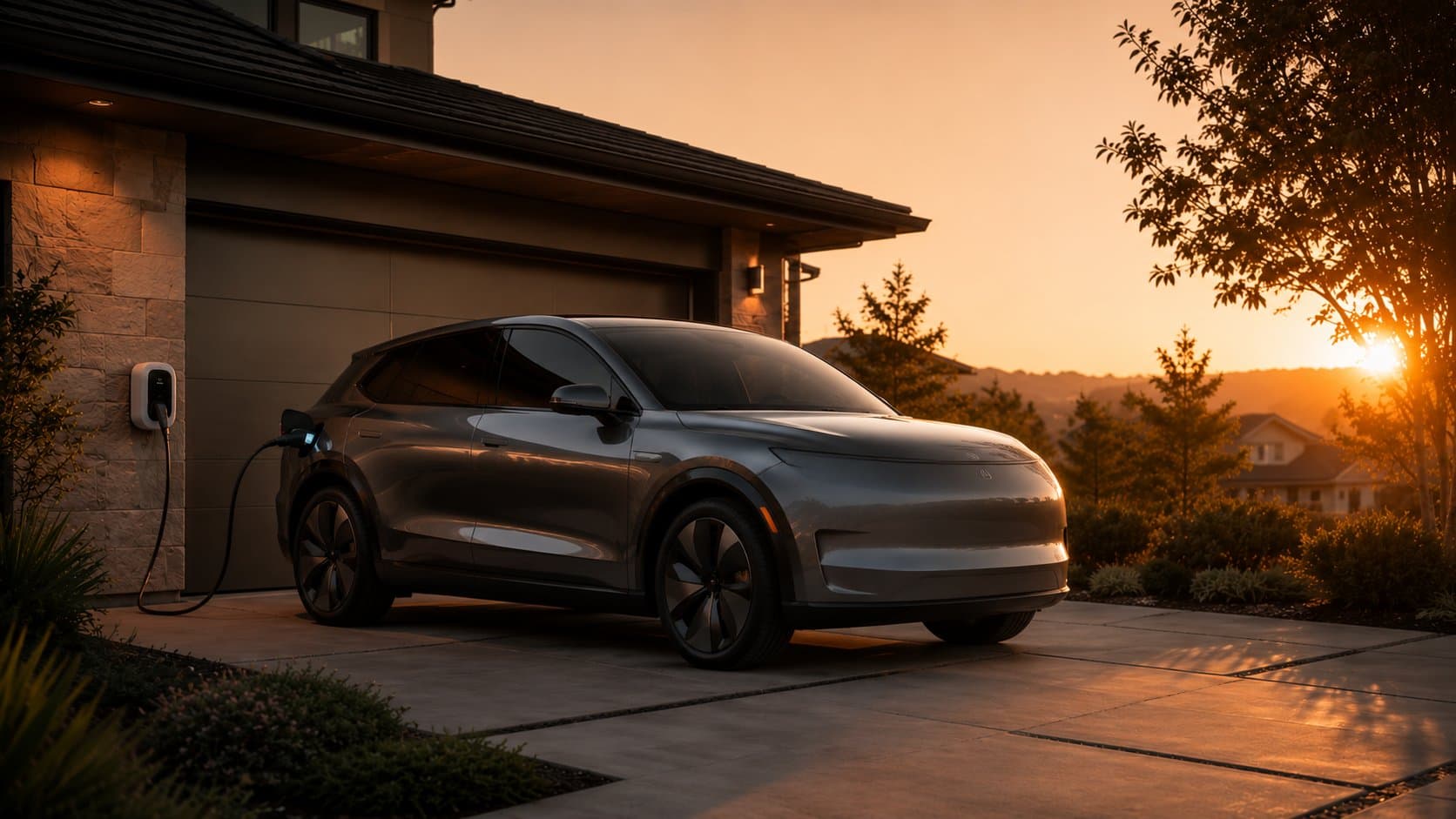
The family EV market in 2026 looks fundamentally different from the family EV market of 2024. Three years ago, the choices were limited and expensive — the Tesla Model Y was effectively the only mainstream family electric SUV at a defensible price point, with everything else either too small, too expensive, or too new to trust. Today, a family shopping with $50,000 has genuine choices. Eight to ten serious vehicles compete directly for the family EV buyer, with price points starting in the mid-$30,000 range and offering 250–300+ miles of range, fast charging, and the kind of safety technology that makes a meaningful difference when you're carrying the people who matter most.
This guide is for families actively shopping for their first electric vehicle in 2026. It's for parents researching options before stepping into a dealership, families upgrading from a gas SUV who want to know what's actually changed, and anyone trying to make sense of an EV market that has expanded faster than most buyers can keep up with.
Every vehicle in this guide is available new in the United States in 2026, priced under $50,000 in commonly purchased trim levels (before incentives), and has the size, safety, and practical features that real family use demands. We've focused on what matters when you're loading two kids and a stroller, taking a road trip with grandparents, or simply living with the vehicle as your daily driver for the next five to seven years.
What a Family EV Actually Needs in 2026
Before specific recommendations, the criteria that should guide your selection:
Genuine range that handles real driving patterns. Marketing range numbers are aspirational. Real-world range in actual conditions — highway speeds, climate control running, children's devices charging — is typically 75–85% of the EPA rating. Look for vehicles rated 270+ miles to ensure you have 220+ miles of usable real-world range. For families that road-trip regularly, prioritize the 300+ mile rated models.
Fast charging compatibility. The new industry standard is NACS (North American Charging Standard) connector, formerly Tesla-only. Vehicles being sold in 2026 should either come with NACS native or include an adapter for Supercharger access. DC fast charging speeds matter for road trips — look for vehicles capable of 150kW+ charging, which adds 200+ miles of range in roughly 30 minutes.
Three-row capability or genuine cargo space. Families with three or more children, or families that frequently transport additional passengers, should prioritize three-row vehicles (Kia EV9, Hyundai Ioniq 9, VW ID. Buzz). Smaller families can prioritize cargo space and rear-seat comfort in two-row vehicles.
Federal and state EV incentive eligibility. The federal EV tax credit of up to $7,500 still applies in 2026 for vehicles meeting domestic manufacturing and battery sourcing requirements. State incentives vary widely — California, Colorado, New York, and several other states stack additional credits on top. Many of the vehicles in this guide qualify; verify current eligibility for your specific configuration at fueleconomy.gov before purchase.
Safety ratings appropriate for family transport. All vehicles in this guide carry IIHS Top Safety Pick or NHTSA 5-Star ratings. EVs benefit from a structural advantage — the heavy battery pack lowers the center of gravity, reducing rollover risk and providing additional crash protection in side-impact scenarios.
Service and warranty support. Battery warranties on EVs are typically 8 years / 100,000 miles. Vehicle warranties (bumper-to-bumper) range from 3 years / 36,000 miles to 5 years / 60,000 miles depending on manufacturer. For first-time EV buyers, the longer warranties (Hyundai/Kia 5 years/60,000 miles bumper-to-bumper, plus 10 years/100,000 miles powertrain) provide meaningful peace of mind.
Top Family EVs Under $50,000 in 2026
These selections are organized by family use case rather than strict price tier, because the right vehicle depends as much on family size and driving patterns as on budget. All prices listed are approximate 2026 MSRPs before incentives.
For Families With One or Two Young Children: Compact and Mid-Size Crossovers
These vehicles offer enough space for car seats, strollers, and the practical equipment that families with young children carry, without the size and cost of full three-row SUVs.
Chevrolet Equinox EV
Starting at approximately $34,000–$38,000 USD depending on trim, the 2026 Chevrolet Equinox EV represents the most genuinely mainstream family electric vehicle on the market. The vehicle is built on GM's Ultium platform, shares manufacturing infrastructure with the Cadillac Lyriq and Honda Prologue, and offers 319 miles of EPA-rated range in the FWD configuration.
The Equinox EV's strengths are practical family attributes: easy step-in height for putting children into car seats, good outward visibility for parents who want to monitor their kids while driving, familiar SUV proportions, and plenty of room for car seats and strollers without feeling like a bus. Cargo space behind the rear seats is competitive with the gas-powered Equinox that millions of American families already drive.
Why it works for families: The most accessible price point for a serious family EV. Familiar Chevrolet ownership experience. Wide dealer network for service. Mainstream design that doesn't shout “I drive an EV.”
Tradeoffs: Interior materials in lower trims are practical rather than premium. Charging network experience trails Tesla's, though this gap is closing as more networks add NACS connectors.
Best for: First-time EV buyers who want a mainstream family crossover at the most accessible price point.
Honda Prologue
Starting at approximately $41,395 for the EX FWD trim and reaching the high $40,000s in higher trims, the 2026 Honda Prologue cements Honda's electric future with a mid-size SUV that blends mainstream Honda reliability with GM-based EV engineering. The Prologue shares its Ultium platform with the Chevrolet Blazer EV but receives Honda-specific tuning, interior design, and quality control.
Parents Magazine named the Prologue one of America's “Best Electric 5-Passenger SUVs” — a recognition that reflects its genuine family suitability. The 296-mile EPA range, NHTSA 5-star overall safety rating, and Honda's traditional refinement combine to create a family vehicle that doesn't require apologies.
Why it works for families: Honda's brand-level reliability reputation. Best-in-class safety ratings. Refined ride quality that's genuinely comfortable for long family drives. Honda dealership service network is strong nationwide.
Tradeoffs: Fast-charging performance and app integration lag behind some competitors (Mustang Mach-E, ID.4). Pricing in higher trims approaches the $50,000 ceiling.
Best for: Honda loyalists and families prioritizing reliability, safety, and refined daily driving over flashy tech.
Hyundai Ioniq 5
Starting at approximately $43,000–$47,000 depending on trim, the Hyundai Ioniq 5 has earned its position as one of the most consistently recommended family EVs since its launch. The 2026 model continues to offer 303 miles of range in the long-range RWD configuration, ultra-fast 350kW charging capability (10 to 80 percent in approximately 18 minutes when paired with a compatible charger), and distinctive design that reads as confident rather than generic.
For families, the Ioniq 5's flat floor (a benefit of dedicated EV platform design) creates exceptional rear-seat legroom and a flexible interior that can be configured for varied family needs. The vehicle-to-load capability (allowing the Ioniq 5 to power external devices via an electrical outlet) is genuinely useful for camping, tailgating, or emergency power during outages.
Why it works for families: Industry-leading 350kW fast-charging makes road trips genuinely practical. Spacious rear seat for car seats and larger children. 10-year/100,000-mile powertrain warranty.
Tradeoffs: Distinctive styling is polarizing; some buyers will prefer more conventional design. Lower trims have noticeably less standard equipment than competitors at similar prices.
Best for: Tech-forward families who road-trip regularly and value the most refined fast-charging experience available.
Ford Mustang Mach-E
Starting at approximately $39,000–$48,000 for trims meeting the under-$50,000 threshold, the Ford Mustang Mach-E remains a strong family choice despite its name. The vehicle is a five-passenger crossover SUV that happens to wear Mustang badging — the “Mustang” name is a marketing decision; the vehicle itself is a practical family SUV with good cargo space, comfortable rear seating, and Ford's mature EV platform.
The 2026 Mach-E offers 270–300+ miles of range depending on configuration, includes Ford's BlueCruise hands-free highway driving system in higher trims, and benefits from a Ford dealership service network that exists in virtually every American community.
Why it works for families: Refined driving dynamics that make daily driving genuinely pleasant. BlueCruise hands-free highway technology is excellent for long-distance family travel. Strong Ford dealership support nationwide.
Tradeoffs: Some buyers find the Mustang branding mismatched with the family-SUV reality. Interior materials are competitive but not best-in-class.
Best for: Families who want a refined daily driver with excellent highway technology and don't mind the Mustang name.
Volkswagen ID.4
Starting at approximately $40,000–$46,000 (and often discounted into the high $30,000s during promotional periods), the 2026 Volkswagen ID.4 offers a family-friendly interior, comfortable ride quality, and pricing that frequently sneaks under $45,000 on popular trims. The ID.4 is built in Chattanooga, Tennessee — meaningful for buyers who want a domestically manufactured EV.
The ID.4's interior is genuinely spacious for the vehicle's external dimensions, with a flat floor (EV platform benefit) creating notable rear-seat room. Cargo space behind the second row is competitive with the larger Honda Prologue and Chevrolet Equinox EV.
Why it works for families: Comfortable ride quality. Spacious interior. Strong promotional pricing in current market conditions. American manufacturing.
Tradeoffs: Infotainment system has been criticized for early-generation issues, though 2026 updates have addressed many concerns. Charging speeds are competent but not class-leading.
Best for: Families prioritizing interior space and ride comfort over cutting-edge technology, and who want to support American EV manufacturing.
For Outdoor and Adventure-Oriented Families
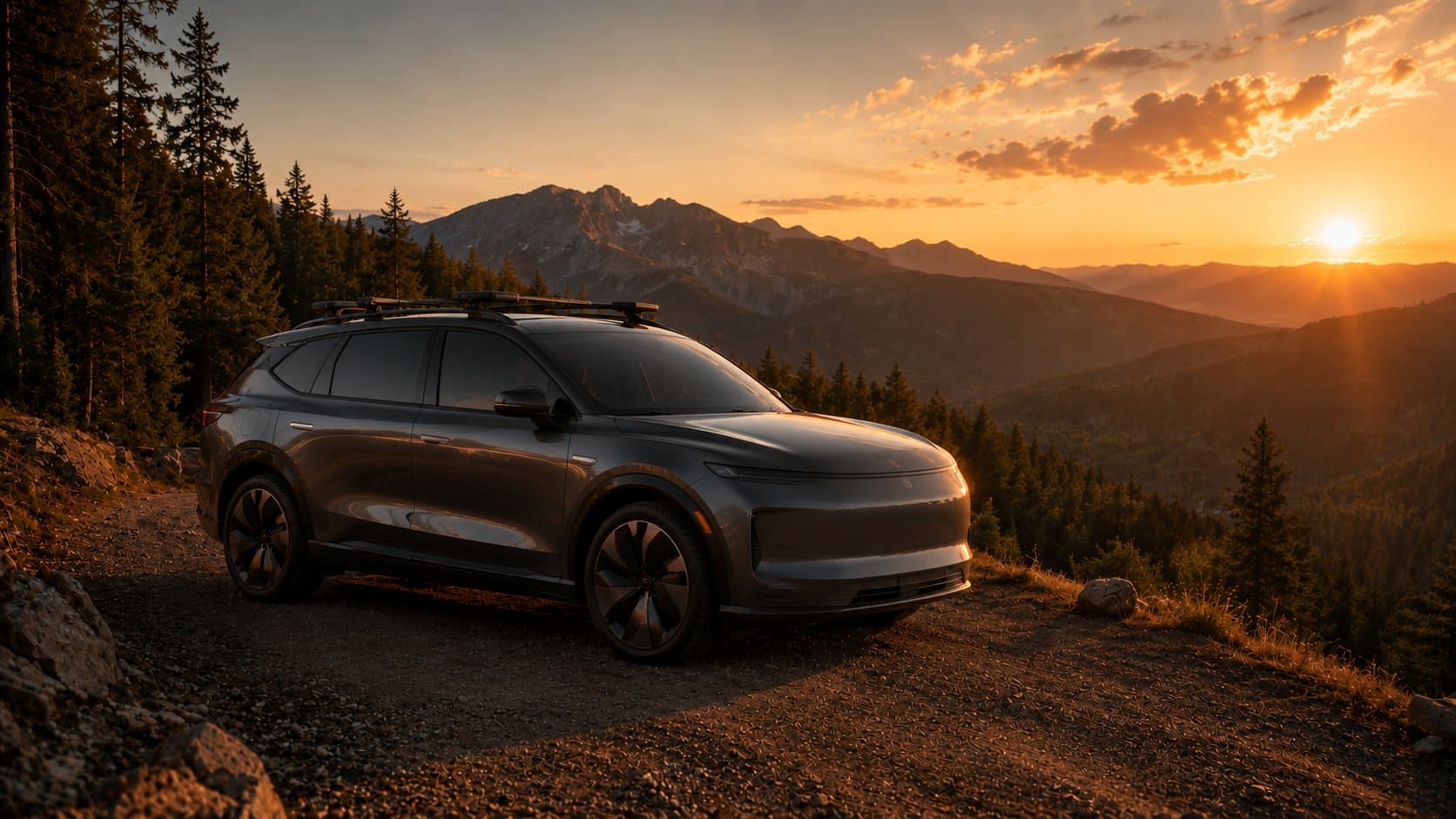
These vehicles offer standard all-wheel drive, ground clearance, and the kind of capability that families who hike, camp, or drive in regions with significant winter weather need.
Subaru Solterra
Starting at approximately $42,000–$48,000, the Subaru Solterra is the electric vehicle for families committed to Subaru's outdoor-oriented brand identity. Built jointly with Toyota (which sells the same vehicle as the bZ4X), the Solterra includes standard all-wheel drive across all trims, 8.3 inches of ground clearance, and Subaru's traditional family-safety positioning.
The 2026 updates have improved range to approximately 285 miles for the FWD-equivalent configuration. The Solterra's outdoor-ready design includes roof rack mounting points, X-Mode all-terrain drive system, and the kind of utility-focused interior Subaru buyers expect.
Why it works for families: Standard AWD for winter and rural driving. Subaru's family-safety brand identity is genuine and earned. Strong dealer network in regions where it matters most (Northern states, mountainous areas).
Tradeoffs: Range is competitive but not class-leading. Charging speeds lag some competitors.
Best for: Outdoor-oriented families in regions where AWD genuinely matters.
Subaru Trailseeker
The 2026 Subaru Trailseeker represents Subaru's most direct EV pitch for buyers who want an electric SUV that still feels outdoorsy and useful. Starting at approximately $45,445 for the Limited trim, the Trailseeker offers standard all-wheel drive, a strong 375-horsepower setup, a legitimate 3,500-pound tow rating, more than 260 miles of range, and quick 10 to 80 percent fast-charge windows.
The Trailseeker is positioned as Subaru's “real utility” EV — for families that actually use crossovers as tools rather than as fashion statements. The 5-seater configuration includes generous cargo space, all-weather capability, and Subaru's traditional emphasis on visibility and practicality.
Why it works for families: 3,500-pound tow capacity is genuinely useful for families with travel trailers, boats, or trailers. Standard AWD with Subaru's traditional all-weather capability. 375 horsepower is plenty for family hauling and merging.
Tradeoffs: Range trails some competitors. New model with less long-term ownership data than established alternatives.
Best for: Outdoor families who tow trailers, boats, or other equipment and need a genuine utility EV.
For Three-Row Families and Larger Households
Three-row electric SUVs were rare just a few years ago. By 2026, several have entered the market and represent the only real options for families with three or more children or those who frequently carry extended family.
Kia EV9 (Entry Trim)
The Kia EV9 has helped redefine what's possible in three-row electric family transport. The entry-level Light trim starts at approximately $54,900 in current 2026 pricing — slightly above the $50,000 ceiling of this guide, but worth mentioning because it's the most mature three-row EV in the under-$60,000 space, and used examples from the 2024–2025 model years are increasingly available under $50,000.
For families specifically needing three rows of electric seating, the EV9 offers up to 304 miles of range, genuine adult-friendly third-row seating (a rare achievement at any price point), 800-volt fast charging capability, and Kia's strong warranty coverage (10 years/100,000 miles powertrain).
Why it works for large families: Genuinely usable third row. Strong range. Class-leading warranty. Refined ride quality.
Tradeoffs: Pricing in 2026 has crept above $50,000 for new examples in most configurations. Used market provides better value.
Best for: Larger families who need three rows and can stretch slightly above $50,000 for a new EV9 or shop the used market for slightly older examples.
Volkswagen ID. Buzz (Entry Trim)
The 2026 Volkswagen ID. Buzz starts at approximately $59,995 for the base Pro S trim — also above the $50,000 ceiling, but mentioned because it's worth understanding for families considering the three-row segment. The ID. Buzz combines genuine van-style practicality (sliding doors, flat floor, exceptional cargo capacity) with VW's playful retro design language.
For families who specifically need van-style functionality (sliding doors for tight parking situations, easy access for older relatives, maximum cargo space), the ID. Buzz is currently the only meaningful electric option in this format.
Why it works for families: Sliding doors are genuinely useful. Maximum cargo space. Three rows with usable second-row captain's chairs. Distinctive styling that families either love or don't.
Tradeoffs: Above the $50,000 ceiling. Range is competitive but not class-leading. New model with limited ownership history.
Best for: Families who need van-style functionality and can stretch the budget.
A Note on the Tesla Model Y
The 2026 Tesla Model Y remains the default answer to “What's the best electric SUV?” in the U.S. — and for many family buyers, it's still the most rational choice. Starting at approximately $44,990 for the base RWD configuration and reaching the high $50,000s in performance variants, the Model Y offers 320+ miles of range, the most mature fast-charging network (Supercharger), and the most refined EV software experience available.
The Model Y's tradeoffs for families are well-documented. Build quality has improved but still varies. The minimalist interior with virtually everything controlled through the central screen is polarizing — some families find it elegant; others find it frustrating during the daily reality of family transport. The optional third-row seating is genuinely only suitable for small children.
Why it still matters for families: Best-in-class fast-charging network. Mature software. Strong residual value. Easy ownership experience.
Why it might not be right: Polarizing minimalist interior. Build quality concerns persist. Tesla's direct-sales model means no traditional dealer service relationships.
Best for: Tech-comfortable families who value the Supercharger network and don't mind the unconventional ownership experience.
Buying Considerations Specific to Family EV Purchases
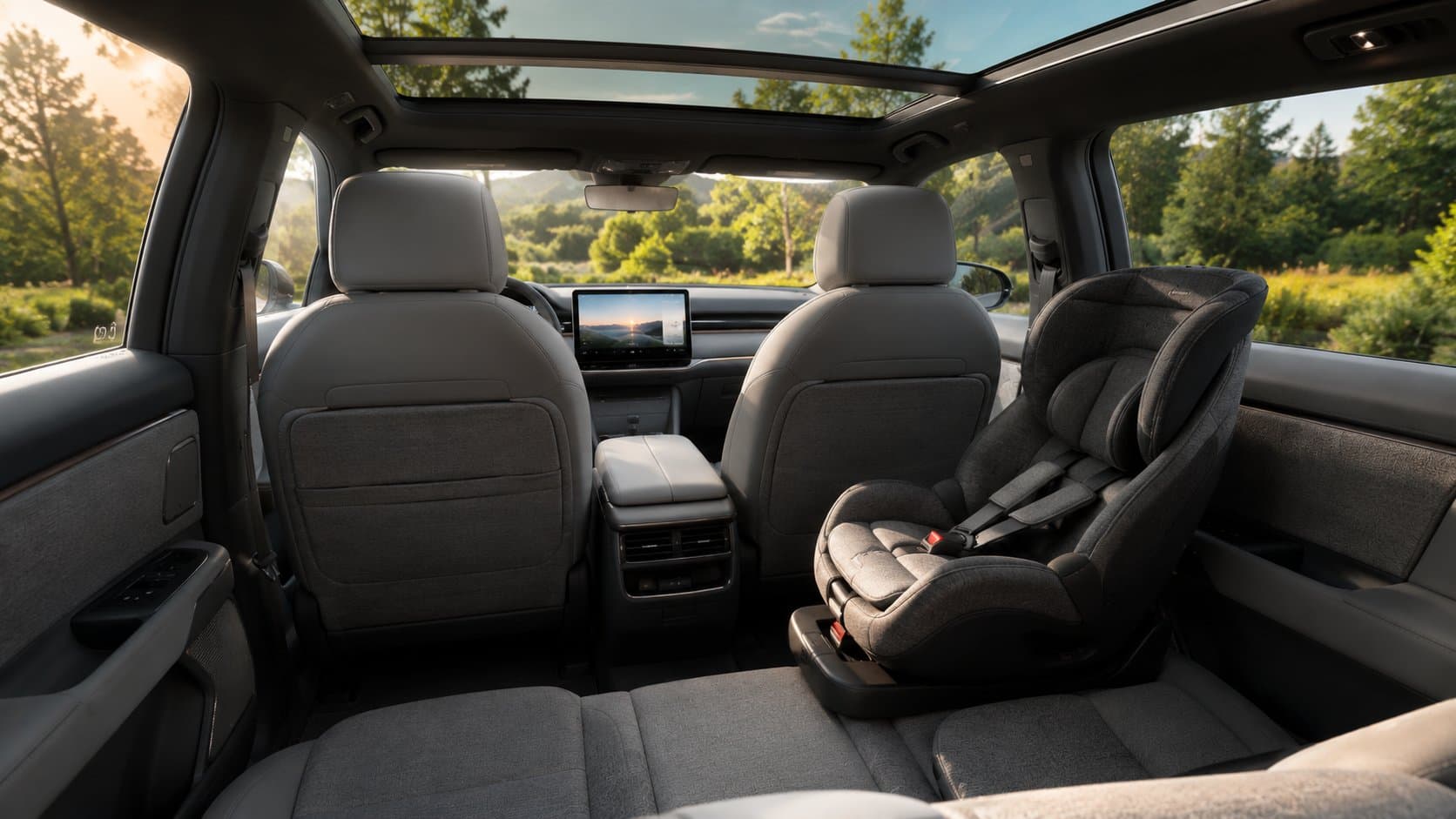
Test drives with the actual family. Bring the children and the car seats to the dealership. Check whether the rear-facing infant seat fits behind the driver's seat without sliding the driver forward uncomfortably. Test how easily the children can climb into the back seat themselves. These practical concerns matter more than spec-sheet numbers.
Home charging installation. Most family EVs require a Level 2 home charger for practical daily charging. Installation typically costs $1,500–$3,000 depending on electrical panel proximity and existing capacity. Get a quote before vehicle purchase — sometimes panel upgrades are needed, which can add $1,000–$2,000 to the project.
Federal tax credit verification. Eligibility for the federal EV tax credit (up to $7,500) depends on the specific vehicle configuration, your income, and final assembly location. Verify current eligibility at fueleconomy.gov before purchase, and consider whether to claim at purchase (point-of-sale discount) or at tax time.
Battery warranty understanding. All vehicles in this guide carry battery warranties of 8 years / 100,000 miles or better. Understand what's covered — most warranties protect against significant degradation (typically defined as battery capacity dropping below 70% of original) but not gradual normal capacity loss.
Range degradation planning. EV batteries lose 1–2% of maximum capacity per year on average. A 300-mile EV in year one will likely deliver 270–285 miles in year five. Buy a vehicle with enough range buffer to remain practical for your family's needs five years from now, not just today.
Insurance considerations. EV insurance rates are typically 20–30% higher than equivalent gas vehicles due to higher repair costs (battery damage, sensor systems, software complexity). Get insurance quotes before vehicle purchase, particularly for newer models without established repair cost data.
Final Guidance for Family EV Selection in 2026
Three rules consolidate the considerations above:
One: Match the vehicle to your actual family size, not your aspirational family size. If your family is realistically two parents and two children, a Chevrolet Equinox EV or Honda Prologue is sufficient. Don't buy a three-row EV9 because you might have a third child someday — buy what your current family needs and trade up later if circumstances change.
Two: Prioritize charging access over peak specs. A vehicle with 280-mile range and easy access to a robust fast-charging network is more practical than a 350-mile vehicle that lacks the same charging infrastructure. The Tesla Supercharger network advantage remains genuine in 2026, but the gap has narrowed significantly as more networks adopt NACS connectors.
Three: Test drive multiple vehicles before deciding. Family EVs vary substantially in driving feel, interior quality, and daily-use ergonomics in ways that don't show up on spec sheets. Drive at least three candidates before committing. Your family will live with this vehicle for 5–7 years; spend an afternoon making sure it's the right one.
The family EV market in 2026 is genuinely mature. The choices are real, the prices are competitive, and the technology has reached the point where an electric family vehicle is a defensible choice on practical terms rather than just environmental ones. The vehicles in this guide will serve families well for the next 8–10 years of ownership, with continuing improvements in charging infrastructure and software making the experience progressively better over time.
For more on the EV market broadly, see our used EV buyer's guide for buyers considering pre-owned options, or our coverage of the 2026 Beijing Auto Show for context on where the global EV market is heading.
A family EV in 2026 is no longer a compromise. For many families, it is the right answer for the next decade of family transportation.