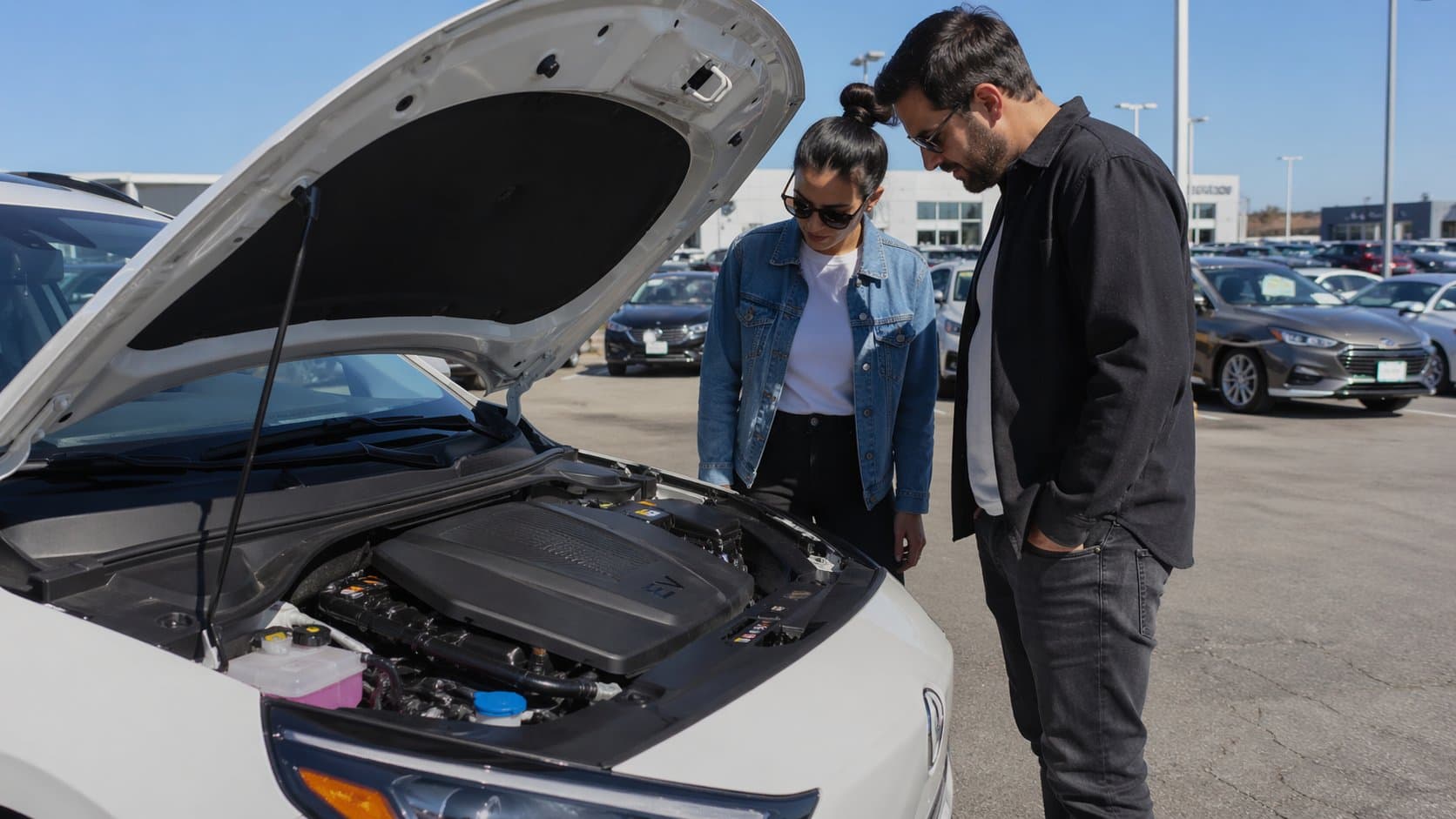
The used EV market in 2026 is fundamentally different from even two years ago. Thousands of off-lease Tesla Model 3s, Chevrolet Bolt EVs, and Hyundai Ioniq 5s are flooding dealership lots as original owners upgrade to newer models — and the prices are compelling. A three-year-old EV with 30,000 miles often costs 40–50% less than its original sticker price, which means you can drive electric for the price of a new gas economy car.
But buying a used EV isn't the same as buying a used gas car. The battery is the single most expensive component — often worth $10,000–$20,000 — and its condition determines whether you're getting a deal or inheriting a problem. This guide covers everything you need to know before signing the paperwork.
Why Used EVs Are Such Good Deals Right Now
Three factors have created a buyer's market for used EVs in 2026.
First, the federal EV tax credit changes eliminated credits for many new EVs while creating a $4,000 used EV tax credit for qualifying vehicles. This shifted buyer demand toward used models, but the supply of off-lease vehicles has grown even faster — creating a surplus that pushes prices down.
Second, rapid technology improvement means that a 2023 EV feels “old” to tech-focused buyers even though it's mechanically excellent. A 2023 Tesla Model 3 with 280 miles of range is a perfectly capable daily driver, but the owner who wants the latest software features trades it in — and you benefit from their upgrade cycle.
Third, depreciation on EVs has been steeper than gas cars historically, though this is stabilizing. A 2023 Chevrolet Bolt EV that stickered at $27,500 can be found for $15,000–$18,000 with 25,000 miles. That's a modern, capable EV for the price of a well-used Civic. Browse current EV deals to compare new and used pricing side by side.
The Battery Health Question
Battery degradation is the #1 concern for used EV buyers — and the #1 area where fear exceeds reality. Modern EV batteries (2020 and newer) are engineered to retain 80–90% of their original capacity after 100,000–150,000 miles. That means a used EV with 40,000 miles likely still has 90–95% of its original range.
However, not all batteries age equally. Factors that accelerate degradation include frequent DC fast charging (Level 3), consistent charging to 100%, leaving the battery at very low states of charge for extended periods, and extreme heat exposure without thermal management.
How to Check Battery Health
Before buying any used EV, check the battery's State of Health (SOH). Here's how for the most common models:
Tesla: Use the Tesla app or a third-party tool like Recurrent to check estimated range vs. original EPA range. A 2021 Model 3 Long Range with an original 358-mile rating should show 310+ miles at 40,000 miles.
Chevrolet Bolt: The MyChevrolet app or an OBD-II reader with Torque Pro shows battery capacity in kWh. The original 65 kWh pack should read 58+ kWh after 50,000 miles.
Hyundai/Kia (E-GMP platform): These vehicles display battery health percentage directly in the infotainment system under the EV settings menu.
General rule: If the battery shows less than 85% SOH and the car has fewer than 80,000 miles, something is wrong — either the car was abused with excessive fast charging, or there's a cell imbalance that needs attention.
The Best Used EVs to Buy in 2026
Best Overall Value: Chevrolet Bolt EV (2022–2023)
Used price: $14,000–$20,000
Original MSRP: $26,500–$31,500
Range: 259 miles (EPA)
The Bolt is the used EV sweet spot. GM replaced every Bolt battery under a recall program in 2022–2023, which means even a 2020 Bolt likely has a brand-new battery pack with a fresh warranty. The 259-mile range handles daily driving and occasional road trips. The small hatchback body won't work for everyone, but for commuters and city drivers, the Bolt's combination of new battery, proven reliability, and sub-$20,000 pricing is unbeatable. Our used EV guide covers even more sub-$25K options worth considering.
Best Premium Value: Tesla Model 3 (2021–2022)
Used price: $22,000–$30,000
Original MSRP: $39,990–$54,990
Range: 272–358 miles (EPA, depending on variant)
The Model 3 dominates the used EV market by volume — and prices have dropped significantly as newer Model 3 Highland versions hit the market. A 2021 Model 3 Long Range with 30,000 miles offers Supercharger network access, over-the-air updates, and 300+ miles of real-world range for $25,000–$30,000. The Supercharger network alone is a major advantage over competing used EVs.
Best Family Value: Hyundai Ioniq 5 (2022–2023)
Used price: $25,000–$33,000
Original MSRP: $41,450–$55,920
Range: 220–303 miles (EPA, depending on variant)
The Ioniq 5's spacious interior, 800V ultra-fast charging capability (10–80% in 18 minutes), and distinctive design make it the best used electric crossover value. The E-GMP platform has proven reliable in its first years of production. Used Ioniq 5s with the Long Range battery offer genuine road-trip capability at $10,000–$20,000 below their original price.
What to Inspect Beyond the Battery
A used EV has fewer mechanical failure points than a gas car — no transmission, no timing belt, no exhaust system — but there are specific items to check:
Tires: EVs are heavier than equivalent gas cars and produce instant torque, both of which wear tires faster. Check tread depth carefully. EV-specific tires (Michelin Pilot Sport EV, Continental EcoContact) are $200–$300 each — budget for replacement if tread is below 4/32”.
Brakes: Ironically, EV brakes often last 100,000+ miles because regenerative braking handles most deceleration. But this means brake rotors can develop surface rust from disuse. Check for pulsation during braking — surface rust usually clears itself, but deep corrosion may require rotor replacement. See our EV maintenance breakdown for long-term cost expectations.
Cabin air filter: Often neglected by first owners. A clogged cabin filter reduces HVAC efficiency and increases battery drain for heating/cooling. Budget $30–$50 for replacement.
12V battery: EVs still use a traditional 12V battery for accessories, and these fail with the same frequency as gas cars. Ask when it was last replaced — a 3-year-old 12V battery may need replacement soon ($100–$200).
Charging port and cable: Test both Level 1 (110V) and Level 2 (240V) charging. Check the charging port for damage, corrosion, or a loose fit. Ensure the mobile charger and all adapters are included. Use our charging stations map to test DC fast charging compatibility before you buy.
The Used EV Tax Credit
The federal used EV tax credit provides up to $4,000 for qualifying vehicles purchased from a dealer. Key requirements: the vehicle must cost $25,000 or less, you must buy from a licensed dealer (not private party), your adjusted gross income must be below $75,000 (single) or $150,000 (married filing jointly), and the vehicle must be at least two model years old.
This credit makes sub-$25,000 used EVs effectively $21,000 or less — pushing EVs into price territory that competes directly with used gas economy cars.
The Verdict
Buying a used EV in 2026 is one of the smartest automotive purchases available. The combination of steep depreciation, proven battery longevity, the $4,000 federal tax credit, and dramatically lower operating costs (electricity vs. gasoline, minimal maintenance) means a used EV often costs less to own over five years than a comparable new gas car — even though the purchase price is lower.
The Chevrolet Bolt at $15,000 with a replaced battery is the value king. The Tesla Model 3 at $25,000 is the premium pick. And the Ioniq 5 at $28,000 is the family choice. All three are proven, reliable, and available at prices that make the “EVs are too expensive” argument officially outdated. Check out our EV cost calculator to see exactly how much you'd save switching from gas to electric.